
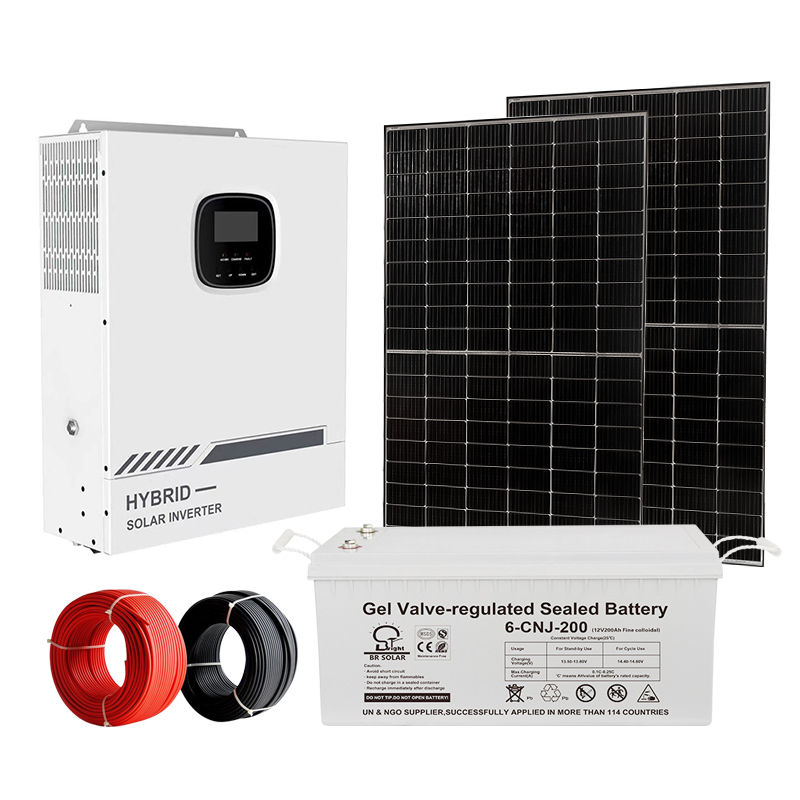
As the global demand for renewable energy continues to rise, solar power systems are becoming increasingly vital in addressing energy shortages and promoting sustainable development. A critical component of any solar power installation is the solar inverter, a device that converts the direct current (DC) generated by solar panels into alternating current (AC) suitable for household and commercial use. Understanding the various types of solar inverters available in the market is essential for optimizing energy efficiency and ensuring reliable power supply.
### Introduction to Solar Inverters
Solar inverters play a pivotal role in the overall performance of a solar power system. The conversion from DC to AC is necessary because most home appliances and electrical grids operate on AC electricity. Moreover, solar inverters also perform essential functions like maximum power point tracking (MPPT), system monitoring, and safety management. Choosing the right type of inverter can significantly impact the effectiveness and cost-efficiency of a solar installation.
### Types of Solar Inverters
Solar inverters can be broadly classified into three main categories:
1. **String Inverters**
2. **Microinverters**
3. **Hybrid Inverters**
#### 1. String Inverters
String inverters are the most commonly used type in residential and commercial solar systems. In this setup, multiple solar panels are connected in series to form a "string," which feeds DC power to a centralized inverter. The string inverter then converts this DC power into usable AC power.
**Advantages:**
- Cost-effective due to centralized installation.
- Easier maintenance because there is only one inverter to monitor.
- Proven technology with a high reliability record.
**Disadvantages:**
- Performance is limited by the weakest panel in the string; shading or dirt on one panel can reduce the whole string’s output.
- Not ideal for installations with complex roof layouts or variable orientation.
#### 2. Microinverters
Microinverters are small inverters installed on each individual solar panel. Instead of a central inverter, each panel converts its own DC output to AC independently.
**Advantages:**
- Improved energy harvest, as shading or faults in one panel do not affect the others.
- Enhanced system monitoring on a per-panel basis.
- Greater flexibility for complex roofs or partial shading conditions.
**Disadvantages:**
- Higher initial cost due to multiple inverters.
- Slightly more complex installation.
#### 3. Hybrid Inverters
Hybrid inverters, also known as multi-mode inverters, integrate the capabilities of a solar inverter and a battery inverter. These inverters can manage power from solar panels, batteries, and the grid seamlessly.
**Advantages:**
- Supports energy storage solutions, enabling load shifting and backup power.
- Enables self-consumption optimization by storing excess solar energy.
- Ideal for off-grid or grid-tied systems with battery backups.
**Disadvantages:**
- Higher cost and complexity.
- Batteries require additional maintenance and monitoring.
### The Growing Importance of Solar Inverters
With the increasing adoption of solar energy worldwide, particularly in regions with limited electricity access, the role of solar inverters has never been more crucial. Many countries still experience dark roads and unreliable power supply during the night. Solar street lighting combined with advanced inverter technology offers a sustainable and efficient solution, enhancing safety and accessibility for communities.
### Company Introduction
A professional manufacturer and exporter specializing in solar power systems understands these dynamics well. Starting from street lighting poles and gradually expanding to the broader solar street light market, the company has established itself as a trusted name in solar energy solutions. Their product portfolio ranges from energy storage systems, solar panels, lithium and gelled batteries to various types of inverters.
This evolution reflects a commitment to addressing global energy challenges, particularly in countries where electricity is scarce. By providing reliable solar solutions, the company empowers communities to light up their streets and buildings sustainably, reducing dependence on traditional grid electricity and fossil fuels.
### Innovations and Future Trends in Solar Inverters
The solar industry continues to innovate, with inverter technologies improving in efficiency, design, and intelligence. Advanced monitoring systems now allow users to track their energy production and consumption in real time, enabling better energy management. Furthermore, the integration of smart grid technology facilitates dynamic energy distribution and demand response.
Looking ahead, the integration of artificial intelligence (AI) and machine learning in inverter systems promises predictive maintenance and enhanced performance optimization. Hybrid and smart inverters will likely play a pivotal role in the transition toward distributed energy resources and microgrids, making renewable energy more accessible and reliable.
### Conclusion
Solar inverters are indispensable in converting solar energy into usable power, directly influencing the performance and reliability of solar power systems. Whether it's the cost-effective string inverter, the flexible microinverter, or the multifunctional hybrid inverter, each type offers unique advantages catering to different applications.
As the world moves toward greener energy solutions, companies specializing in solar power systems and related technologies continue to innovate and expand, making sustainable energy accessible to regions with limited power infrastructure. By understanding and selecting the appropriate solar inverter type, users can maximize the benefits of their solar installations, contributing to a cleaner and brighter future for all.
For communities plagued by unreliable electricity and dark streets, solar-powered lighting combined with advanced inverter technology is not just a technological upgrade—it is a beacon of progress and hope.